by Deac Jones | Feb 2, 2021 | News
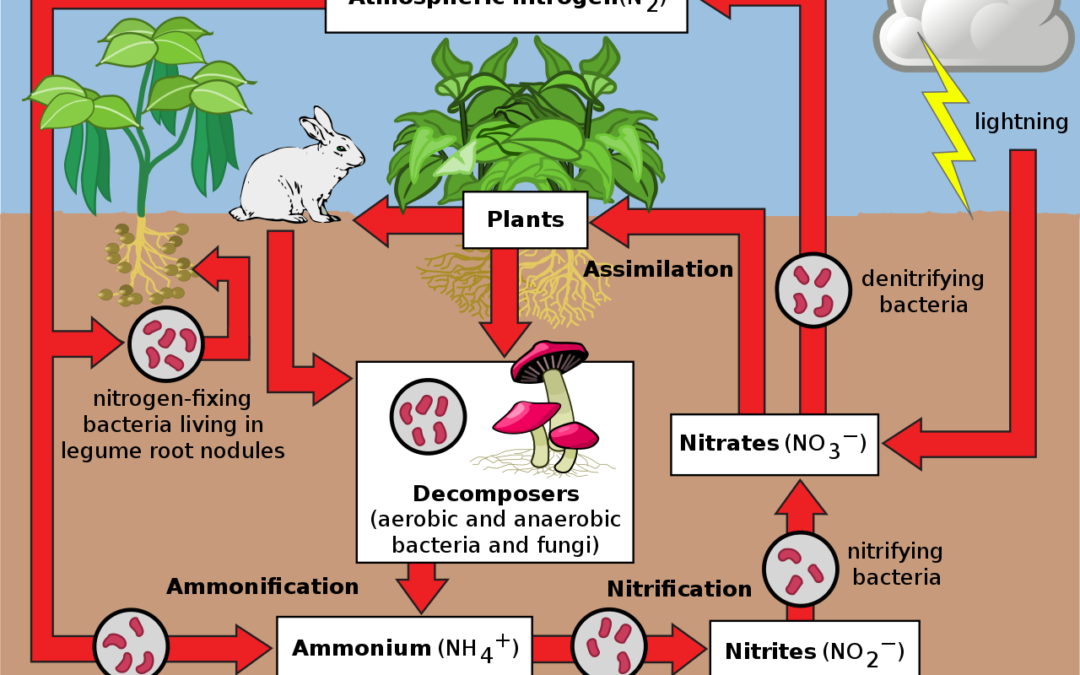
Growers are facing increased regulation, especially when it comes to the application of nitrogen. Nitrogen takes a lot of energy to produce, has negative environmental impacts and is expensive. As a result, there’s a growing interest in reducing fertilizer use — because YOU CAN. If farms can start paying more attention to biological nitrogen fixation for crop production, they can realize comparable yields with less input.
by Deac Jones | Jan 26, 2021 | News
My alma mater, Colorado State University, is offering students a degree in Agricultural Biology. As an Agricultural Biology student, you can learn to integrate skills and knowledge to solve problems related to plants, insects, and microbes in natural and managed ecosystems. That’s quite a transformation from the days I was there.
Andaman Ag believes that our broad array of biological products can make a significant difference in terms of delivering improved crop yields, quality and ROI for both organic and conventional growers. With agricultural crop prices down and the pipeline to move large quantities of harvested crops limited due to Covid-19, quality harvests are going to be crucial.
Biological farming is based on scientific principles and common sense. At its core is the principle that microbes are the basis of all agricultural production systems. Biological farming seeks to restore to the soil the naturally occurring beneficial micro-organisms and macro-organisms, including bacteria, fungi, protozoa, and earthworms. It creates a sustainable soil management system, enhancing the availability of nutrients and complementing the plant’s own defense systems.
by Deac Jones | Jan 5, 2021 | News
We are all carbon-based life forms. The atoms in our bodies were once part of the carbon dioxide in the air. This process of “carbon fixation” is how most new organic matter is created. These same carbon atoms are in our bodies and other life forms from a process known as the Calvin cycle. The sugars created in the Calvin cycle are also used by plants for long-term energy storage. For quick energy, we rely on adenosine triphosphate (ATP)., the energy-carrying molecule found in the cells of all living things. When energy is needed by the cell, it is converted from storage molecules into ATP. ATP then serves as a shuttle, delivering energy to places within the cell where energy-consuming activities are taking place. The Calvin cycle takes molecules of carbon straight out of the air and turns them into plant matter. It’s called the second stage of photosynthesis because this is where sugars are synthesized but the reactions are not driven by light. Andaman Ag has a product that augments this process.
by Deac Jones | Dec 22, 2020 | News
Merry Christmas and Happy New Year!
One of my favorite writer/poets is Rudyard Kipling. He was born in India, which inspired much of his work. Kipling may be most known for writing the Jungle Book (1894). One poem of Mr. Kipling that I never get tired of reading is the wisdom in How to Be A Man. It was a man’s world back then so I’ve taken the liberty of revising the title. I hope it inspires you in the New Year to hold on, take life as it comes and find success and reward in everything you endeavor.
Rudyard Kipling: How To Be A Man (or Woman)
If you can keep your head when all about you
Are losing theirs and blaming it on you,
If you can trust yourself when all men doubt you,
But make allowance for their doubting too;
If you can wait and not be tired by waiting,
Or being lied about, don’t deal in lies,
Or being hated, don’t give way to hating,
And yet don’t look too good, nor talk too wise:
If you can dream – and not make dreams your master;
If you can think – and not make thoughts your aim;
If you can meet with Triumph and Disaster
And treat those two impostors just the same;
by Deac Jones | Nov 17, 2020 | News, Water Management, Water Usage
Almost 16 million California residents are living in drought conditions. The severity of the drought is measured on a scale that starts at Abnormally Dry and ranges up to Extreme Drought. In Abnormally Dry areas, pasture or crops aren’t fully recovered. In Extreme Drought conditions we’re looking at major crop and pasture losses and widespread water shortages and restrictions.
I mentioned in my last newsletter that Andaman Ag sells AquaVantage, a bio-degradable, starch-based polymer that’s used as a soil amendment, capable of absorbing up to 500 times its weight in water to store and gradually release it to crops. The result: crops require 50% less water, given the water holding capacity! We believe it’s a breakthrough product that can have a major role in mitigating drought conditions.

