On April 26, 1986, reactor No. 4 of the Chernobyl Nuclear Power Plant in northern Ukraine—then part of the Soviet Union—exploded, sending a massive plume of radiation into the sky. Nearly four decades later, Chernobyl and much of the surrounding area remain uninhabited—by humans, at least.
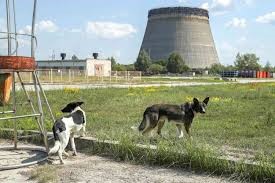
Animals of all kinds have thrived in humanity’s absence. Living among radiation-resistant fauna are thousands of feral dogs, many of whom are descendants of pets left behind in the speedy evacuation of the area so many years ago.
The idea of radiation speeding up natural evolution isn’t a new one. The practice of purposefully irradiating seeds in outer space to induce advantageous mutations, for example, is now a standard method for developing crops that are well-suited for a warming world.
Scientists have been analyzing certain animals living within the Chernobyl Exclusion Zone (CEZ) for years, including bacteria, fungi, rodents, and even birds. The study uncovered that the feral dogs living near the Chernobyl plant showed distinct genetic differences from dogs living only some 10 miles away in nearby Chernobyl City.
Fungi found in Chernobyl are examples of life adapting to extreme environments. These particular fungi contain melanin, a pigment that absorbs radiation and converts it into chemical energy, a process called radiosynthesis. This ability has allowed the fungi to thrive in areas with high levels of ionizing radiation.
I bring up the Chernobyl disaster for a very important reason: we see the same type of accelerated evolution happening in agriculture. We’ve witnessed plants becoming resistant to chemical herbicides, insects that have evolved to be resistant to specific insecticides, fungicides that don’t work as well as they once did, and so on. Our world is constantly evolving to SURVIVE! These mutations are all survival mechanisms for plants that have been around 460 million years, fungi for at least 1.5 billion years, and insects for 480 million years. We represent just a fraction of a second on the world time clock.
We look at these “evolutions” as something novel, yet they are not. And, as in the Chernobyl example, these evolutions have happened very quickly. As people invest in agriculture, we need to complement nature instead of fighting it. I’ve hit on this point regularly: our best approach to improving commercial farming results is to try to complement nature on a grand scale. Nature never intended to grow a single monolithic crop across hundreds of acres, and if we’re going to make that approach work more efficiently, then we need to add more nature.
What does “adding more nature” mean? Concentrate on improving the soil profile and begin to mitigate applications that are tough on soils and plants like synthetic herbicides, fungicides, and insecticides. I’m not saying that they don’t have a place in some operations, but other biological products can be substituted to reduce their negative impact. For example, we see many products that are developed from other plants and biological materials that when applied to crops show great performance. These include biological control agents, crop nutrients, soil conditioners, biostimulants, organic acids, microbial-based products, etc.
Nature is evolving. If we can do a better job of evolving in a more substantial and complementary manner, instead of fighting it, we’re going to generate better returns and have longer term success in growing our crops.