“The diets we eat today have less nutritional density than what our grandparents ate, even if we eat the same thing,” said Kristie Ebi, a professor at the University of Washington’s Center for Health and the Global Environment.
That’s a striking statement. Same food, same plate — less nutrition. And it’s not a fringe claim. It’s backed by decades of research, and new science is now pointing to a driver most people haven’t considered: the air itself.
In February of last year, I wrote a newsletter called The Variable Movement of Nutrients Through Plants that explored a related problem from the agronomic side. The core idea was this: not all nutrients move through a plant at the same speed, and that imbalance has real consequences for what ends up in the fruit, the grain, or the nut.
Calcium is the example I keep coming back to. It moves slowly — almost reluctantly — through the plant. Yet it may be the most structurally critical element in agriculture. Calcium builds and maintains cell wall integrity. Without adequate calcium in the right place at the right time, a plant’s ability to absorb other nutrients — phosphorus, potassium, micronutrients — is compromised. The walls are weak, the transport is inefficient, and the plant compensates by doing less with more.
Nitrogen sits at the opposite end of the spectrum. It moves rapidly through the xylem and phloem, driving the synthesis of amino acids, proteins, and chlorophyll. It is responsive, fast, and highly visible in the field — which is exactly why we push it so hard. The problem is that nitrogen-driven growth can outpace the slower-moving elements that need to accompany it. The plant gets bigger. It doesn’t necessarily get better.
That’s the internal version of the problem. Now there’s an external one, and it’s operating at a scale none of us can manage with a spray rig.
For the past several years, Sterre F. ter Haar, an environmental scientist at Leiden University in the Netherlands, and her colleagues have been compiling a database of all existing research on nutrient changes linked to rising CO₂. Hundreds of studies, ranging from tightly controlled lab experiments to large-scale analyses of real-world crops.
Their conclusion: rising carbon dioxide is making food less nutritious — and the mechanism is surprisingly direct.
Plants take in CO₂ through stomata, the tiny pores in their leaves. When CO₂ is more abundant in the air, plants don’t need to open their stomata as often. That conserves water. But it also means the plant pulls less water up through its roots — and dissolved minerals travel with that water. Less water movement means fewer minerals reaching the plant. The plant grows larger on carbon, but it doesn’t make up the mineral deficit.
The result is crops that are growing bigger and faster, producing higher yields on paper, but delivering more sugar and fewer nutrients per bite. Those who argue that CO₂ is simply “plant food” aren’t wrong about the growth side — but they’re ignoring what gets left behind.
And this is before we account for heat. Research shows that rising temperatures are expected to cut yields of some staple crops by more than 20 percent by 2050 in worst-case scenarios — far outpacing any growth benefit from elevated CO₂. Bigger plants, less nutrition, and eventually fewer of them.
So what do growers do with this?
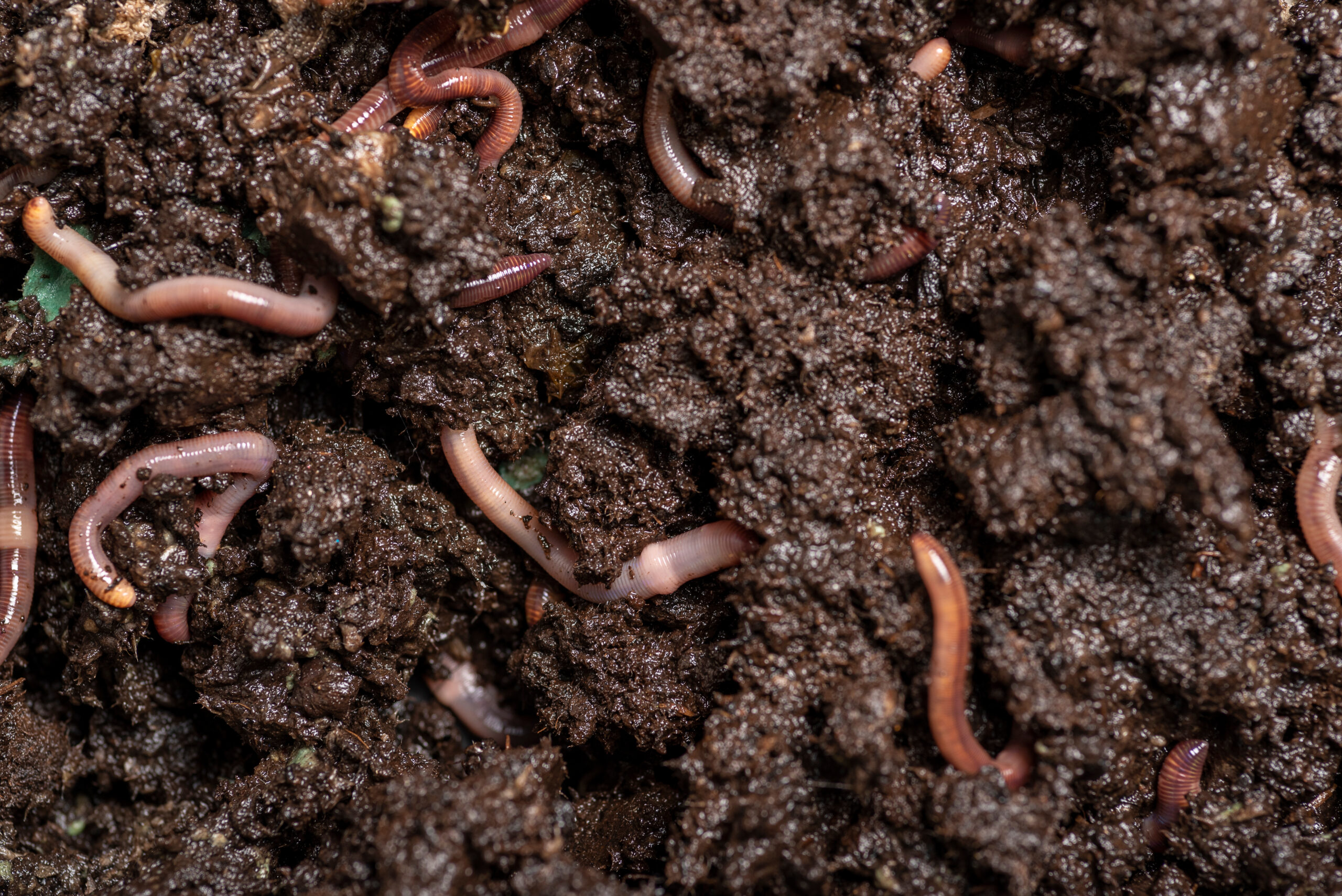
You can’t control atmospheric CO₂. But you can control whether your soil is set up to move minerals efficiently even when transpiration rates are lower. You can control whether calcium is available and mobile when the plant needs it for cell wall development — not just present in the soil, but actually moving. You can control the biological activity at the root zone that drives mineral exchange independent of simple water flow.
That’s where the Andaman Ag system is directly relevant to a problem that most people are framing as purely environmental. The nutrient dilution happening at a global scale is being accelerated at the field level every time calcium gets stuck, silicon is absent, and soil biology isn’t doing the work of making minerals available.
The food on your trees and vines isn’t going to get more nutritious because the atmosphere improves. It’s going to get more nutritious because you make the soil work harder at the one job that still matters most: getting minerals from the ground into the plant, efficiently, at the right time.
That’s still within your control. That’s still the job.
Deac Jones is the founder of Andaman Ag Corporation and the author of From the Ground Up, available on Amazon and the Acres USA Bookstore. For more: www.Andaman-Ag.com