by Deac Jones
Most people haven’t heard of rhizophagy, but it’s a simple process that runs quietly in every healthy soil. Plants pull certain microbes into their root hairs, take what they need, and send them back out into the soil to recharge. It’s one of nature’s cleanest nutrient loops.
What’s becoming clear is that microalgae play a much bigger role in this cycle than anyone realized.
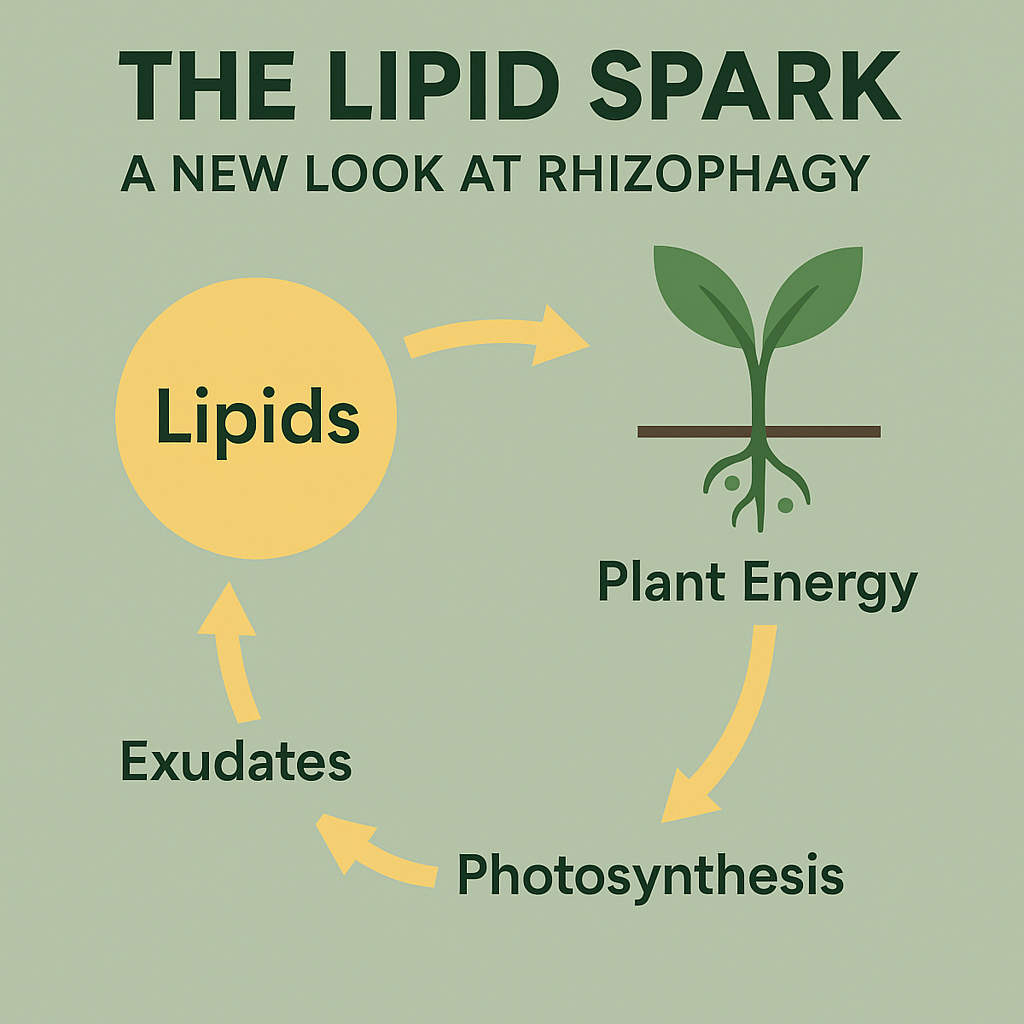
Microalgae — like those in EnSoil Algae — are naturally rich in lipids. Lipids are the most energy-dense molecules in biology. When these microalgae move into the root hairs, the plant not only picks up minerals, it also picks up energy in the form of these lipids.
And that extra energy does something important:
- it speeds up photosynthesis
- which leads to more sugars
- which the plant releases into the soil as exudates
- and those exudates feed the whole soil microbiome
It becomes a simple chain reaction:
lipids → energy → photosynthesis → exudates → biology.
This is the part of the story that hasn’t been talked about — plants aren’t just taking nutrients from biology…
they’re taking energy, and that energy gets the whole system moving.
Here’s where it gets even more interesting:
cyanobacteria, often called “blue-green algae,” also move through root hairs and carry their own lipid load. They thrive on the extra carbohydrates that energized plants push into the soil.
So the better the plant feels, the more it feeds the soil — and the more the soil biology responds.
That’s where our products fit naturally into the picture:
- EnSoil Algae provides the primary microalgal kickstart — the lipid spark that energizes the plant.
- Sequester® brings in cyanobacteria that thrive in that energized environment and help accelerate nutrient cycling.
Microalgae start the engine.
Cyanobacteria help it run faster.
The plant and soil biology take it from there.
A simple idea, but one with big implications for how we think about healthy soils going forward.