Soil pH controls everything below ground. Learn how Growthful Pre-Emerge from Aqueus uses carbonic acid and extra hydrogen molecules to rebalance soil pH, improve nutrient uptake, and make every input work better.


Soil pH controls everything below ground. Learn how Growthful Pre-Emerge from Aqueus uses carbonic acid and extra hydrogen molecules to rebalance soil pH, improve nutrient uptake, and make every input work better.

If a clay particle were the size of a basketball, a soluble silicon particle (like the ones in Quick-Sol) would be about the size of a BB — small enough to slip between the seams and start rebuilding structure from the inside out.
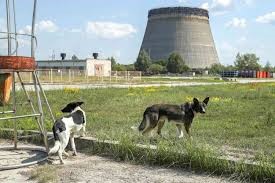
On April 26, 1986, reactor No. 4 of the Chernobyl Nuclear Power Plant in northern Ukraine—then part of the Soviet Union—exploded, sending a massive plume of radiation into the sky. Nearly four decades later, Chernobyl and much of the surrounding area remain uninhabited—by humans, at least.
Animals of all kinds have thrived in humanity’s absence. Living among radiation-resistant fauna are thousands of feral dogs, many of whom are descendants of pets left behind in the speedy evacuation of the area so many years ago.
The idea of radiation speeding up natural evolution isn’t a new one. The practice of purposefully irradiating seeds in outer space to induce advantageous mutations, for example, is now a standard method for developing crops that are well-suited for a warming world.
The ambition of agriculture to do more with less presents some real challenges to growers, but help is on the way. Plant biostimulants are any substances or microorganisms applied to plants with the aim of enhancing the efficiency of nutrient use, increasing abiotic stress tolerance and/or improving crop quality. Unfortunately, increasing reliance on agrochemicals has caused damage to groundwater resources, soil fertility, soil biodiversity, and the environment. But biostimulants offer a means to create better balance in our farming practices.
Many growers are familiar with the benefits of applying, for example, seaweed extracts to their crops or the key substances of one plant being shared with another to generate improved results. This direction, plant essences of one plant being used on another, offers a way of doing more with less.

Despite its abundance—second only to oxygen in Earth’s crust—Silicon is still overlooked in many crop nutrition programs. It’s not yet classified as an “essential” nutrient for most plants, but this perspective needs to change or at least shift, given its extensive list of benefits for plants as one of Earth’s core elements.
The life of a plant, much like that of any other organism, is intricately dependent on the intake and transport of essential nutrients. These nutrients, absorbed predominantly from the soil, are fundamental to the plant’s growth, development, and metabolic functions.

I wrote this newsletter back in late October 2019. It came up this week from one of our suppliers as he had just purchased my book. Thank you, Travis, my friend, as it’s worth repeating.
All plants require 17 elements to complete their life cycle. Carbon, hydrogen and oxygen are obtained from the air and water. Plants derive the remaining 14 elements from the soil, which is often enriched with fertilizers and amendments. Plant growth and development largely depend on the combination and concentration of available mineral nutrients.

There is lots of talk these days about carbon and how to manage it, especially when it comes to carbon in our atmosphere. Over the centuries, humans have expanded their carbon emissions as societies have advanced, resulting in more carbon in the atmosphere which leads to climate change.
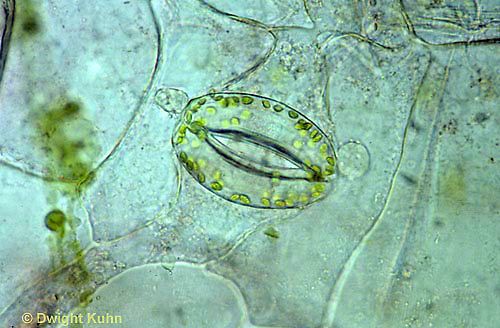
It’s important to think about plants as being incredibly adroit at adapting to changing conditions and consider how we can best support them as they try to function efficiently.

The definition of regenerative agricultural practices is evolving. In the beginning, my definition was simple: engage in agricultural practices that work to maximize carbon sequestration in your soils and do it in a manner that minimizes your carbon footprint. Recently, I read a definition of regenerative agriculture as a “toolkit of principles/practices to restore and preserve biodiversity and soil health by creating a functional ecosystem that reduces external inputs while producing nourishing farm products.” This definition begins to consider how carbon is cycling through the system, emphasizing supporting microbial activity and nutrient cycling. All good in my thinking, but how do we get there?