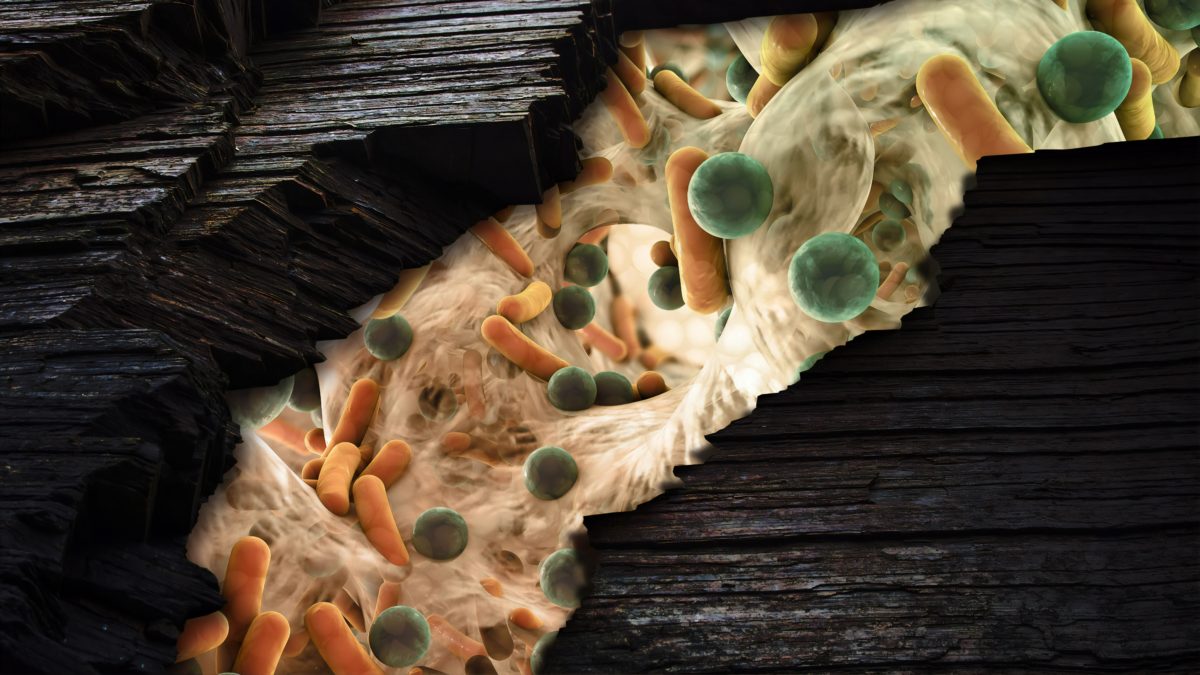
Scientists have started calling the soil microbiome and the human gut microbiome “forgotten organs” — two living systems we can’t survive without and almost never think about. The closer researchers look, the more they find the same story playing out in both.
Here’s the part that should stop every grower cold: the health of your soil and the health of the person eating your crop may be the same story.
Start with the cast. Both ecosystems are built on the same bacterial families — Firmicutes, Bacteroidetes, Proteobacteria, Actinobacteria — in strikingly similar numbers. Soil microbes unlock nutrients into forms a plant can actually use. Gut microbes do the same job with our food. Both crowd out pathogens by occupying the ground first.
We don’t eat dirt. So how does the connection travel? The plant is the bridge. Raw fruits and vegetables carry microbes and microbial compounds straight from the field into our gut — even vitamins like B12, synthesized by the microbes living on and in the plant. Every fresh harvest is a quiet inoculation.
Then there’s the defense system, and this is where it gets uncanny. When a plant hits drought or heat, it manufactures polyphenols, flavonoids, and carotenoids to neutralize the damage. Eat that plant, and those same compounds go to work as antioxidants in your body. A plant defending itself in the field is building the exact chemistry that defends you at the table.
The parallels run deeper. Both plants and people deploy the same conserved heat-shock proteins to hold their cells together under stress. And both rely on a microbial “immune reservoir”: in soil, beneficial bacteria switch on Systemic Acquired Resistance, priming a plant’s defenses before trouble arrives; in us, gut microbes train immune cells to respond sharply without overreacting. Same principle. Different host.
And those compounds point to a bigger measure: nutrient density. A crop grown in biologically active soil doesn’t just yield more — it can pack more minerals, vitamins, and protective phytonutrients into every bite. That’s the real output of a living soil system, and it’s the part a yield number never captures.
Now the uncomfortable part. We’re degrading both systems at once. Ultra-processed food and antibiotics strip human gut diversity. Agrochemicals and monoculture strip soil diversity. Weaker soil grows weaker microbes, which grow food that looks the same but carries less — fewer minerals, thinner phytonutrient content, a smaller reservoir passed to the people who eat it. Researchers have a name for this single, connected problem: a “One Health” crisis.
Which is exactly why we start where we do.
When we farm to keep soil biology alive, we aren’t only chasing yield and resilience in the field. We’re growing food that carries its defenses all the way to the dinner table.
Living soil doesn’t just feed the plant. It feeds the person eating the plant.
Andaman Ag Corporation • www.Andaman-Ag.com • Deac@Andaman-Ag.com • 415.307.6690