By Deac Jones — Andaman Ag Corporation
Take a shovel into a block that’s been run hard for fifteen years. Same rotation, same chemistry, same program. Turn a slice about a foot deep and look at what comes up.
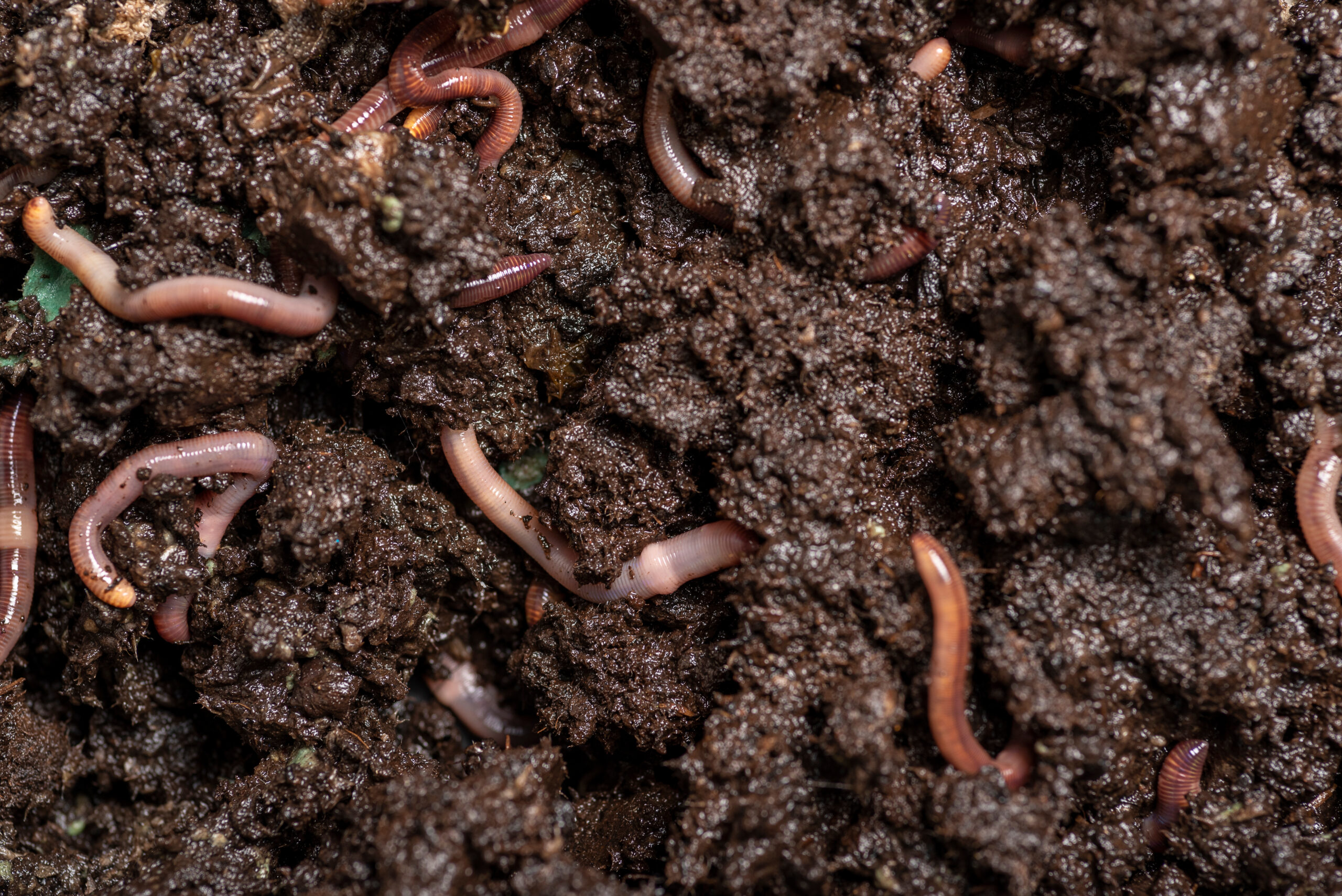
Structure’s tight. Color is uniform all the way down — no dark crumb at the top fading into subsoil, just one flat tone. And nothing moves. No channels, no casts, no worms.
Now pull the soil test on that same block. Phosphorus is adequate. Nitrate is fine. Potassium is where it should be.
So why does the crop act hungry?
What the Austrian study found
In 2015, a research group at BOKU Vienna ran a greenhouse trial that got a wave of attention and then mostly got forgotten. They set up pots with real soil and living earthworms, applied a single label-rate application of a glyphosate-based herbicide, and watched what happened over three months.
The deep-burrowing worms — the vertical ones that build the channels water and roots follow — nearly stopped surfacing to feed within three weeks. The soil-dwelling species that work horizontally through the topsoil dropped their reproduction by more than half.
That’s the finding that made the headlines. It isn’t the interesting one.
The number nobody quotes
Nitrate and phosphate concentrations in the treated soil went up.
Nothing extra was applied. The nutrients weren’t consumed, converted, or carried anywhere. Biological cycling stalled, and what had been moving through the system started sitting in it.
A soil test on that pot would have looked excellent.
That’s the part worth sitting with. We treat a nutrient value as an asset. It is only an asset if something is moving it. Sitting nitrate isn’t fertility — it’s a leaching event waiting on the next irrigation.
Worms are the indicator, not the point
Nobody grows earthworms for a living. They matter because they are the one part of the underground workforce you can actually see.
When they go quiet, the fungal networks, the bacterial communities, and the whole carbon exchange at the root zone have usually gone quiet with them. You just can’t put a shovel through that and count it.
An honest caveat: this was a pot study, two species, controlled conditions. A greenhouse is not a field. Rain, root systems, tillage, and weather all change how residues behave, and anyone telling you a pot trial settles a question is selling something.
But the mechanism it points at isn’t in dispute. Biology moves nutrients. When biology slows, nutrients stop moving — and your input efficiency drops whether or not the soil report reflects it.
This isn’t an argument about one chemical
Plenty of things shut down soil biology, and herbicide residue is only one of them. Bicarbonates, which are essentially liquid concrete for your soil. Compaction. Sodium. A root zone that hasn’t had air in it since the last deep rip.
The failure mode is the same regardless of cause. You keep applying, the numbers keep looking acceptable, and the crop keeps underperforming. That’s where most programs fall short — they add more input to a system that has lost the ability to use what it already has.
Which is why the progression starts where it does. Rebuild before Activate: open the soil, displace the sodium, cut the bicarbonate load, get oxygen back into the root zone. For example, our products, PC3 and Quick-Sol aren’t nutrition. They’re the work that has to happen before nutrition means anything.
Then you activate., our products, Sequester and EnSoil® Algae rebuild the biological exchange at the root zone — the workforce that turns a number on a soil report into something the plant can actually use.
We’re not fighting the plant. We’re rebuilding the crew that feeds it.
Dig a hole this week. Not a probe — a shovel, a foot down, in your worst block and your best one. Look at what’s living in each.
The soil test tells you what’s there. It doesn’t tell you who’s working.
Source: Gaupp-Berghausen, Hofer, Rewald & Zaller (2015), “Glyphosate-based herbicides reduce the activity and reproduction of earthworms and lead to increased soil nutrient concentrations,” Scientific Reports 5:12886.
Deac Jones — Founder & President/CEO, Andaman Ag Corporation Deac@Andaman-Ag.com | 415.307.6690 | www.Andaman-Ag.com Improving Agriculture from the Ground Up®